Bagged vs Bagless Vacuum for Severe Dust Allergies: My Research
This guide to bagged vs bagless vacuum for severe dust allergies explains the practical details worth knowing before you make your next decision.
When you’re battling severe dust allergies, your vacuum cleaner isn’t just a cleaning tool; it’s a crucial part of your respiratory health strategy. I dove deep into the bagged vs bagless vacuum debate specifically for allergy sufferers, trying to figure out which design truly keeps dust particles locked away. My research focused on filtration, ease of maintenance, and overall dust containment. If you’re wondering which type will make your home a sanctuary from allergens, stick around. I’ll break down what I learned and which one I’d lean towards.
Table of Contents
bagged vs bagless vacuum for severe dust allergies: What You Need to Know
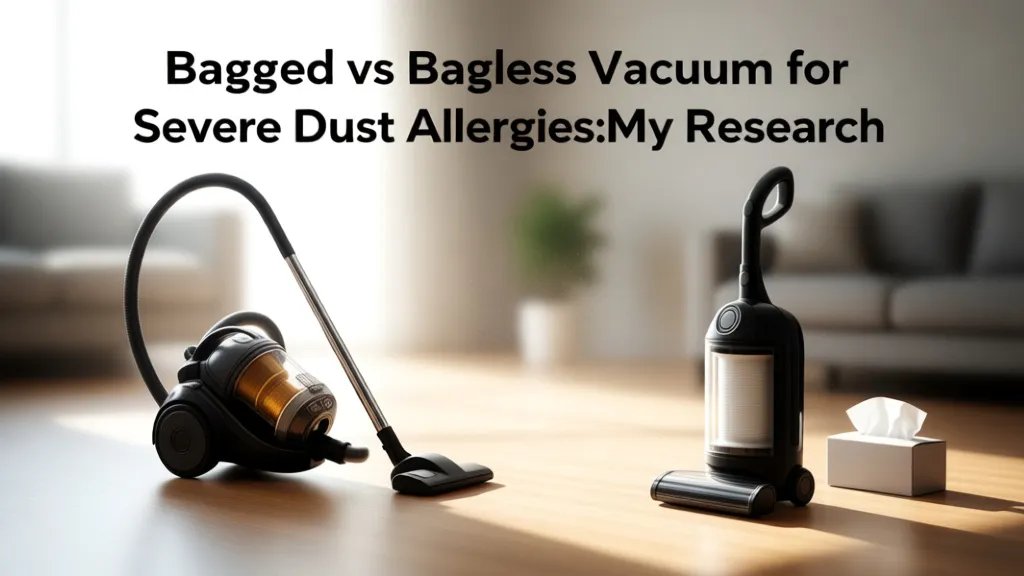
For severe dust allergies, bagged vacuums generally offer superior dust containment because the bag acts as an extra barrier, trapping allergens when you empty it. Bagless models can release more fine dust back into the air during disposal, even with good filters. Therefore, I’d recommend a bagged vacuum for most people with serious dust allergy concerns.
Quick Comparison
| Option | Best For | Strengths | Limitations |
|---|---|---|---|
| Bagged Vacuums | Individuals with severe dust allergies or asthma who prioritize maximum dust containment during emptying. | Excellent dust containment, especially during disposal; bags act as a secondary filter; generally cleaner emptying process; often feature advanced multi-layer bags for trapping fine particles. | Ongoing cost of replacement bags; can lose suction as the bag fills; some models might be bulkier or heavier. |
| Bagless Vacuums | Those who prefer no ongoing costs and don’t mind a potentially messier emptying process, provided they have excellent filtration. | No recurring cost for bags; easy to see when the bin is full; often have powerful, consistent suction until the bin is emptied; many models offer advanced HEPA filtration. | Dust and allergens can be released into the air during bin emptying; requires frequent cleaning of the dustbin and filters to maintain performance; filters can clog faster if not maintained. |
Factor-by-Factor Breakdown
| Factor | Winner | What It Means |
|---|---|---|
| Dust Containment During Emptying | Bagged Vacuums | This was my biggest concern. Bagged vacuums seal dust inside the bag, which you then dispose of, minimizing airborne particles. Bagless vacuums require you to empty a dustbin, and even with careful handling, some fine dust and allergens can escape back into the room, which is a major drawback for severe allergy sufferers. |
| Filtration Effectiveness | Depends (but bagged often has an edge) | Both types can come with excellent HEPA filters, capable of trapping 99.97% of particles. However, the bag in a bagged vacuum acts as an additional layer of filtration, and the entire bag is replaced, ensuring no trapped allergens are disturbed. Bagless models rely solely on their filters and the bin, which can be less effective during the emptying process. |
| Maintenance and Ongoing Costs | Bagless Vacuums | Bagless vacuums win here because there’s no need to buy replacement bags, saving money over time. However, this comes at the cost of potentially more direct exposure to dust when emptying the bin. Bagged vacuums require regular purchases of replacement bags, which can add up, but offer a cleaner disposal experience. |
| Suction Power Consistency | Bagless Vacuums | On paper, bagless vacuums often maintain stronger, more consistent suction as the dustbin fills compared to bagged models, where suction can decrease as the bag gets full. However, for allergy sufferers, the slight dip in suction in a bagged model is often a worthwhile trade-off for better dust containment. |
What Is a Bagged Vacuum?
A bagged vacuum cleaner uses a disposable bag, typically made of multi-layered paper or synthetic material, to collect dirt and debris. When the bag is full, you remove the entire bag from the vacuum and discard it. This design is fundamentally about containment. The bag itself acts as a primary filter, trapping dust, dander, and other allergens. For someone with severe dust allergies, this is a significant advantage because the allergens are sealed away and then thrown out with the trash, rather than being directly handled.
Many modern bagged vacuums also incorporate advanced filtration systems, often including HEPA filters, within the machine itself. This creates a double-barrier system: the bag captures the bulk of the debris, and the machine’s filter catches any finer particles that might escape the bag. The process of emptying is generally cleaner, as you’re not directly exposed to the collected dust. However, you do have the ongoing expense of purchasing replacement bags, and suction can sometimes decrease as the bag fills up.
What Is a Bagless Vacuum?
Bagless vacuum cleaners collect dirt and debris in a reusable dustbin or canister. Once the bin is full, you typically detach it from the vacuum and empty its contents directly into the trash. This design eliminates the need to buy replacement bags, which is a major cost saving and convenience factor for many users. On paper, they often promise consistent suction power because there’s no bag to clog.
However, here’s the thing that concerned me most for allergy sufferers: emptying the dustbin can release fine dust particles and allergens back into the air. Even with a good HEPA filter on the vacuum itself, the act of tipping out the bin is where the potential for re-exposure lies. While you can try to do this carefully outdoors or over a trash can, it’s rarely a completely dust-free process. Bagless vacuums also require regular cleaning of the dustbin and filters to maintain performance, and those filters can clog more quickly if not properly maintained, impacting both suction and filtration.
Which One Should You Choose?
When I started this comparison, I was looking for the absolute best way to manage dust in my home, especially with my family’s allergies. For anyone dealing with severe dust allergies or asthma, the primary concern is preventing allergens from becoming airborne. Bagged vacuums excel here because the disposable bag contains the dust until it’s thrown away. This means less exposure for you and your family during the emptying process, which is a critical difference. I would steer anyone with significant respiratory sensitivities towards a bagged model, even if it means a recurring cost for bags.
However, I also recognize that not everyone has severe allergies, or perhaps budget is a major factor. If you have milder sensitivities or are looking for a more budget-friendly option long-term, a bagless vacuum can work. You’ll just need to be much more mindful of how and where you empty the dustbin, and commit to regular filter maintenance. For these individuals, a bagless model with a truly sealed system and a high-quality HEPA filter can still be effective, but it requires more user diligence to achieve the same level of allergen control as a bagged system.
Frequently Asked Questions
Can bagless vacuums be good for dust allergies?
Yes, bagless vacuums can be good for dust allergies if they feature a high-quality, sealed HEPA filtration system and you are diligent about emptying the dustbin outdoors to minimize airborne dust release. However, bagged vacuums generally offer superior containment during the emptying process.
Do bagged vacuums lose suction faster?
Bagged vacuums can experience a gradual decrease in suction as the bag fills with debris. However, many modern bagged vacuums are designed to maintain strong suction for longer periods, and the trade-off for potential suction loss is often the superior dust containment they offer.
Which type is easier to maintain for allergy sufferers?
Bagged vacuums are generally easier to maintain for allergy sufferers because the dust is sealed in the bag, making disposal a cleaner process. Bagless vacuums require more frequent cleaning of the dustbin and filters, which can expose you to allergens if not done carefully.
Are HEPA filters essential for vacuums for allergies?
Yes, HEPA (High-Efficiency Particulate Air) filters are essential for vacuums used by people with dust allergies. They are designed to trap at least 99.97% of airborne particles 0.3 micrometers in size, including dust mites, pollen, and pet dander.
Final Verdict
After digging into the bagged vs bagless vacuum debate for severe dust allergies, my personal leaning is towards bagged models for most people in this situation. The peace of mind that comes from knowing dust and allergens are sealed away in a disposable bag, and that emptying the vacuum won’t kick up a cloud of irritants, is significant. While bagless vacuums offer cost savings and convenience in not needing to buy bags, the potential for dust release during emptying is a major concern when respiratory health is on the line. If you’re struggling with severe dust allergies, I believe the extra effort in choosing a bagged vacuum with excellent filtration is a worthwhile investment in creating a healthier home environment in 2026 and beyond.
When you revisit bagged vs bagless vacuum for severe dust allergies, start with the practical outcome you want to achieve.
Useful next reads for this topic include best affordable sealed system vacuum for allergies, best HEPA filter vacuum under 100 dollars, and best budget bagged vacuum for allergy sufferers.