Choosing Your First Hunting Rifle Scope: A Guide
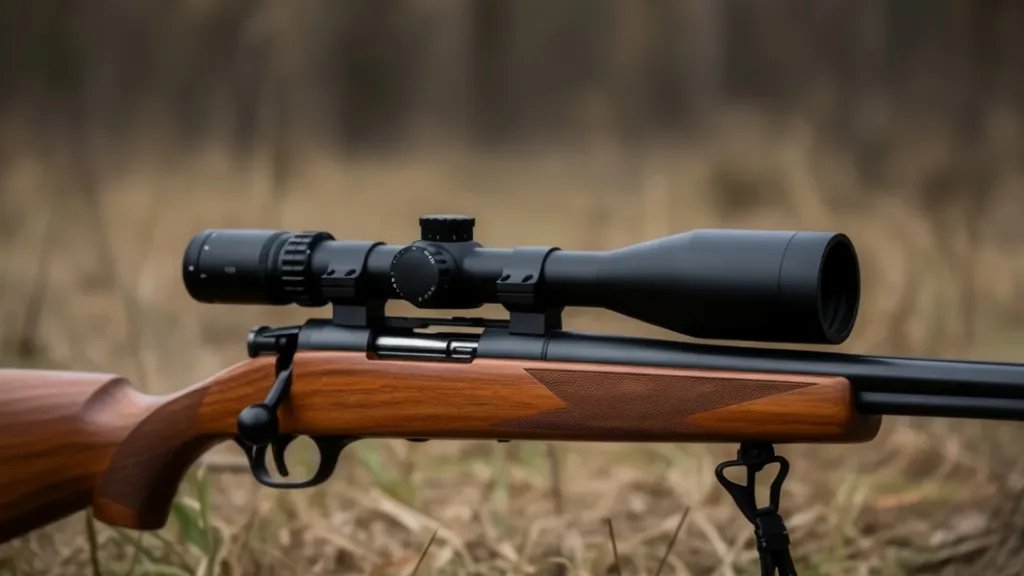
When I first started seriously getting into hunting, the sheer number of options for a hunting rifle scope felt overwhelming. It wasn’t just about picking one that looked good; it was about understanding what actually made a scope perform well in the field, especially when the moment of truth arrives. My goal was to find a scope that offered clarity, durability, and reliable performance without breaking the bank, a balance I think most hunters are looking for.
Over the past few years, I’ve spent a lot of time researching, comparing specs, and talking to experienced hunters. This journey has taught me that while top-tier scopes are impressive, there are fantastic options available that deliver excellent value. This guide is my attempt to share what I’ve learned, cutting through the jargon to help you make an informed decision on your next hunting rifle scope purchase.
Table of Contents
Magnification: Finding the Right Zoom for Your Game
One of the first things you’ll notice about any hunting rifle scope is its magnification range, usually expressed as something like 3-9x or 4-12x. The first number is the “low power” setting, and the second is the “high power.” For most general hunting scenarios, especially for medium-sized game like deer or elk at typical ranges, a 3-9x scope is a solid, versatile choice. It gives you a wide field of view at 3x for quick target acquisition and enough zoom at 9x to make precise shots. If you’re frequently hunting in dense brush where shots are close, you might lean towards the lower end. Conversely, for varmint hunting or long-range plains game, you’ll want to consider scopes with higher maximum magnifications, perhaps 6-18x or even more. Honestly, I’ve found that for most hunters, going much beyond 12x on the high end can sometimes introduce more shakiness than it’s worth without proper support, and the field of view gets quite narrow.
Objective Lens Diameter: Letting in More Light for Dawn and Dusk
The “objective lens” is the big lens at the front of the scope. Its diameter, measured in millimeters (e.g., 40mm, 50mm), directly impacts how much light the scope can gather. This is incredibly important for hunting during the low-light conditions of dawn and dusk, often called the “golden hours.” A larger objective lens generally means a brighter, clearer image, especially when you’re pushing the magnification limits or hunting in shaded forests. However, larger lenses also mean a heavier, bulkier scope, and they often require higher mounting rings to clear the rifle’s barrel. For a good balance of light-gathering ability and manageable size, I often find myself looking at scopes with a 40mm or 44mm objective lens. If you absolutely need the best possible low-light performance and don’t mind the extra weight, a 50mm or 56mm objective lens is certainly an option, but it’s a trade-off to consider.
Reticle Types: From Simple Crosshairs to Advanced BDC
The reticle, or crosshair, is what you look through to aim. This is where things can get really interesting, and honestly, a bit confusing at first. The simplest is the standard duplex reticle, with thick outer posts and a fine inner cross. It’s effective and easy to use. Then you have reticles with dots, hash marks, or circles, often called “BDC” (Bullet Drop Compensating) reticles. These are designed with specific aiming points for different distances, assuming you know your rifle’s ballistics. On paper, they sound amazing for long shots. The catch? You need to match the BDC reticle to your specific ammunition and rifle, and learn how to use it properly. For a first hunting rifle scope, I usually recommend starting with a simple duplex or a reticle with a single, fine aiming dot. It simplifies the aiming process and forces you to learn your rifle’s trajectory, which is a valuable skill in itself. If you’re serious about long-range shooting, then diving into BDC reticles makes sense, but it’s an extra layer of complexity.
Tube Diameter and Construction: Durability Matters in the Field
The main body of the scope is called the tube, and it typically comes in 1-inch or 30mm diameters. Generally, a larger tube diameter allows for more internal adjustment range for windage and elevation, which can be beneficial for long-range shooting or if you need to zero your rifle at a very specific distance. However, for most typical hunting ranges, a 1-inch tube is perfectly adequate and usually results in a lighter overall package. What’s more important for durability is how the scope is constructed. Look for scopes built from a single piece of aircraft-grade aluminum. They should also be nitrogen-purged or argon-purged to prevent internal fogging, and O-ring sealed for waterproofing. I’ve seen scopes fail in the field due to moisture or impact, and it’s a terrible experience. So, while the tube diameter is a spec, the overall ruggedness and sealing are paramount for a hunting rifle scope that will see hard use.
Eye Relief and Exit Pupil: Comfort and Clarity When You Need It
Eye relief is the distance your eye can be from the eyepiece and still see a full, clear image. This is critical for safety, especially with heavy recoiling rifles. If the eye relief is too short, the scope could hit you in the eyebrow or forehead when the rifle recoils, which is kind of wild and painful. Most quality hunting rifle scopes offer at least 3.5 inches of eye relief, which is usually sufficient. The exit pupil is the diameter of the light beam exiting the eyepiece. You calculate it by dividing the objective lens diameter by the magnification. A larger exit pupil provides a brighter image, especially at higher magnifications. However, the human eye’s pupil dilates to a maximum of about 5-7mm in low light. So, while a huge exit pupil might sound good on paper, anything much larger than your eye’s maximum dilation is essentially wasted light and adds bulk. For most hunting, an exit pupil in the 4-7mm range is ideal.
Frequently Asked Questions
What is the best magnification for a hunting rifle scope?
For general deer and elk hunting at moderate ranges, a 3-9x magnification is a very popular and versatile choice. If you hunt in thick brush where shots are close, you might prefer a lower maximum magnification. For longer-range shooting or varmint hunting, you’ll want higher magnification, such as 6-18x or more. My advice for most first-time buyers is to start with a 3-9x or 4-12x hunting rifle scope.
Should I get a first focal plane (FFP) or second focal plane (SFP) reticle?
This is a common question! Second Focal Plane (SFP) reticles are more common in hunting scopes and are generally simpler to use. The reticle size stays the same regardless of magnification. First Focal Plane (FFP) reticles, where the reticle size changes with magnification, are better for long-range shooting because range estimation and holdovers remain consistent across all magnifications. For most traditional hunting, an SFP reticle is perfectly fine and often more budget-friendly. FFP is more of a specialized choice for dedicated long-range hunters.
How important is the objective lens size on a hunting rifle scope?
The objective lens diameter is crucial for light gathering, especially in low-light conditions like dawn and dusk. Larger lenses (e.g., 40mm, 50mm) gather more light, providing a brighter image. However, they also make the scope heavier and bulkier. For a good balance, many hunters opt for 40mm or 44mm. If you frequently hunt in very dim light and don’t mind the extra weight, a larger objective lens can be beneficial.
What does 'fully multi-coated' mean for a rifle scope?
When you see ‘fully multi-coated’ on a hunting rifle scope, it means all glass surfaces have multiple anti-reflective coatings applied to both sides. This significantly reduces light loss and glare, resulting in a brighter, sharper, and more contrasty image. It’s a feature I always look for because it directly impacts visual clarity, especially in challenging light conditions.
Useful next reads for this topic include best scope for 308 hunting rifle, best thermal rifle scope for coyote hunting, and best beginner crossbow for hunting.
Conclusion
Choosing the right hunting rifle scope is a significant decision that can greatly impact your success and enjoyment in the field. While the latest technology and highest magnifications might seem appealing, remember to prioritize clarity, durability, and a magnification range that suits your typical hunting scenarios. For most hunters in 2026, a well-built scope with a 3-9x or 4-12x magnification, a decent objective lens size (around 40-44mm), and a simple, reliable reticle will serve you exceptionally well. Don’t be afraid to invest in quality construction; a scope that holds zero and withstands the elements is worth its weight in gold. Happy hunting!